地域から世界へ、学びを行動へ 〜9年目となる地域と連携したカンボジア学校支援・パレスチナ学校支援〜

地域から世界へ、学びを行動へ

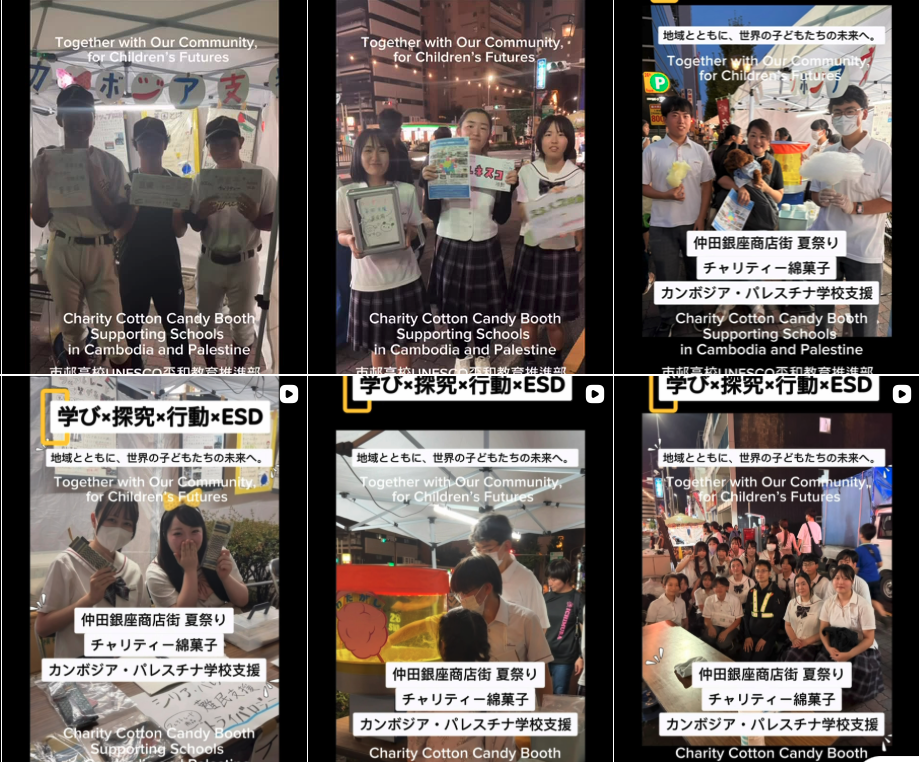
仲田銀座商店街夏祭りでカンボジア・パレスチナ学校支援チャリティーを実施

名古屋経済大学市邨高等学校の生徒たちは、仲田銀座商店街の皆様から温かいご支援をいただき、夏祭りにおいて、カンボジアとパレスチナの学校支援を目的としたチャリティー綿菓子を実施しました。

市邨高校では、ユネスコスクールとして、平和、人権、国際理解、文化の多様性、持続可能な社会づくりを大切にした教育活動を推進しています。

ユネスコ平和教育推進部を中心に、生徒たちは世界で起きている課題を知識として学ぶだけでなく、現地の人々や国内外の学校、国際協力に携わる方々との対話を通して課題の背景を考え、自分たちにできる行動へと学びをつなげています。

今回のチャリティー活動も、募金を集めることだけを目的としたものではありません。

生徒たちは、カンボジアやパレスチナの歴史、紛争、貧困、教育環境について学び、地域の皆様に活動の目的を自分たちの言葉で伝えました。綿菓子作りや来場者との交流、仲間との協働を通して、社会の一員として責任をもって行動することの意味を学びました。

地域での小さな行動が、国境を越え、世界の子どもたちの学びと未来につながることを実感する、貴重なESDの実践となりました。

市邨高校 ユネスコインスタグラムリンク先
https://www.instagram.com/reel/DbQiCOOzA9R/?utm_source=ig_web_copy_link&igsh=MzRlODBiNWFlZA==

◯ 9年目を迎えたカンボジアの子どもたちへの支援

市邨高校によるカンボジアの子どもたちへの支援活動は、今年で9年目を迎えます。

これまで、生徒たちは現地の教育環境や生活課題について学びながら、文房具や子ども服の寄贈、遊具や手洗い設備の整備支援、チャリティー活動、現地と日本をつなぐオンライン学習会などに継続して取り組んできました。

こうした活動で大切にしているのは、現地の人々を一方的な「支援の対象」として捉えないことです。

現地の文化や暮らし、願い、地域の力を尊重し、互いに学び合う姿勢を大切にしています。生徒たちは、支援する側・される側という固定的な関係を越え、共に持続可能な未来をつくる仲間として、対話と協働を重ねています。

本校の継続的な活動は、文部科学省「ユネスコスクール公式ウェブサイト」でも紹介されています。

▶ [名古屋経済大学市邨高等学校のユネスコスクール活動]
(https://www.unesco-school.mext.go.jp/schools/list/nagoya-university-of-economics-ichimura-senior-high-school/)

◯昨年度のチャリティーを、カンボジアの子どもたちへ

昨年度、生徒・学生が地域行事や学校行事を通して取り組んだチャリティー活動は、2026年8月6日にカンボジアの公立学校で実施する遊具贈呈式へとつながります。

当日は、日本と台湾の高校生・大学生が現地を訪問し、これまで探究してきたカンボジアの教育環境、貧困、地域の暮らし、国際協力について発表します。

その後、子どもたちが安全に体を動かし、友達と遊び、心身の成長につなげることのできる遊具を贈呈します。

遊具を届けることだけでなく、現地の子どもたちや地域の皆様と交流し、それぞれの文化や暮らしを学び合うことを大切にします。

▶ [8月6日 カンボジア公立学校への遊具贈呈式・探究学習発表会](https://www.unesco-school.mext.go.jp/?action=bbs_view_main_post&bbs_id=17&block_id=658&nc_session=c1f2p5ub6ub9ickg8qoubm12e6&page_id=0&post_id=45)

◯歴史の記憶から平和を探究する

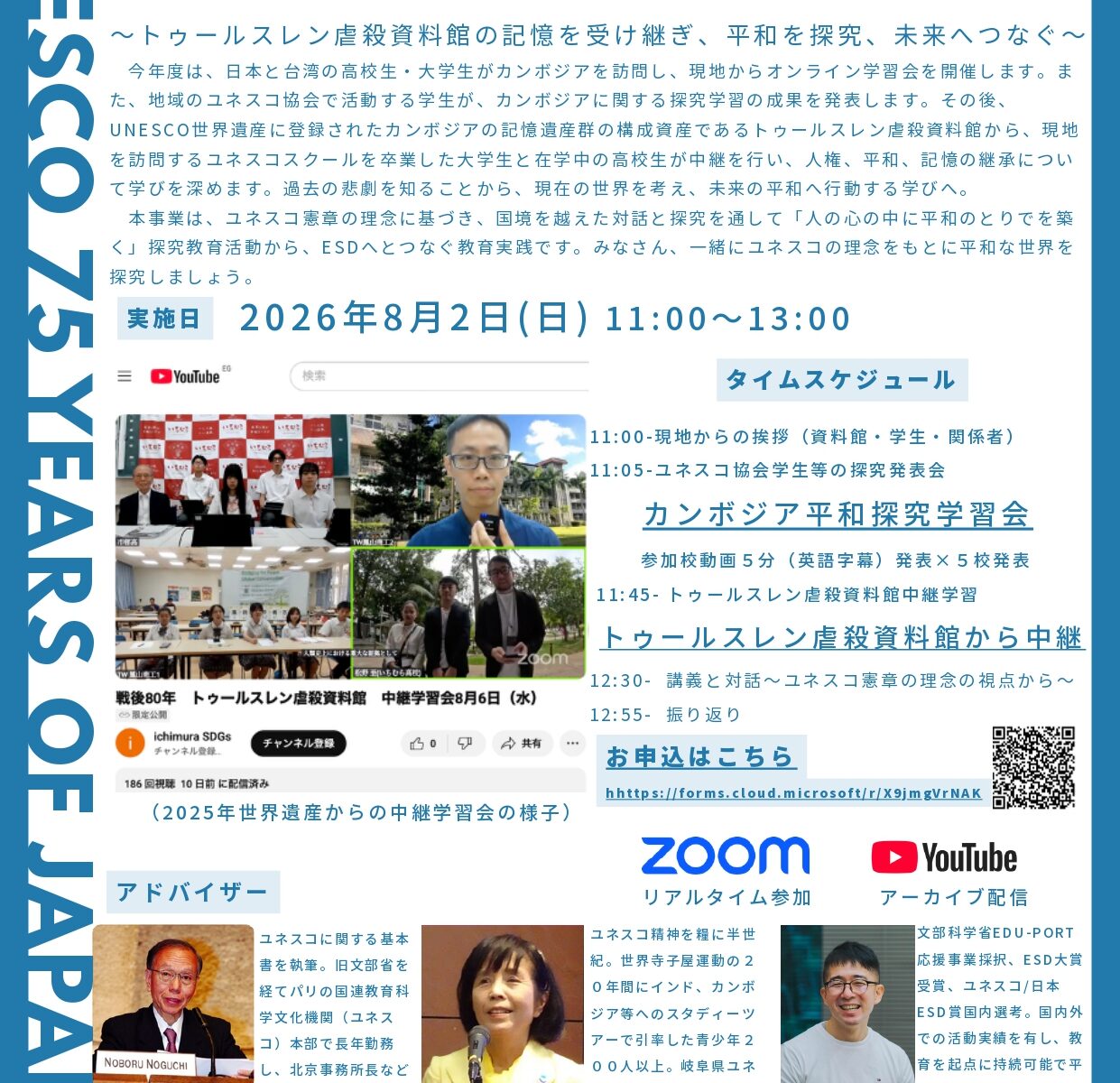
2026年8月2日には、日本のユネスコ加盟75周年記念事業として、カンボジア・プノンペンにあるトゥールスレン虐殺資料館と日本をオンラインでつなぐ探究学習会を開催します。

日本と台湾の高校生・大学生が、クメール・ルージュ政権下で起きた人権侵害や虐殺の歴史について事前に学び、現地からの中継や対話を通して、歴史の記憶を継承する意味を考えます。

過去の悲劇を知ることだけで終わらせず、差別や暴力を生み出す社会の構造、人間の尊厳、平和を守るための責任について考え、現在と未来の行動へつなげます。

これは、平和を単に願うだけではなく、歴史的事実に向き合い、多様な立場から考え、より公正な社会をつくるために行動する力を育む平和教育です。

▶ [8月2日 第2回カンボジア世界遺産からの探究学習会](https://www.unesco-school.mext.go.jp/information/info-list/)

◯難民女性との対話から、公正な社会を考える

2026年8月19日には、日本・台湾・ヨルダンをオンラインでつなぐESD探究学習発表会・国際対談を開催します。

日本と台湾の高校生・大学生が、難民問題、フェアトレード、女性の就労と自立、国際支援について学んだ成果を発表します。さらに、ヨルダンで難民女性の生活や仕事に関わる活動に取り組む方々と対話します。

この学習会では、難民女性を「かわいそうな人」や一方的な支援の対象として捉えるのではなく、一人ひとりが経験、能力、尊厳、希望をもつ存在であることに向き合います。

また、私たちが商品を購入するという日常の選択が、生産者の仕事、生活、人権、社会の公正さとどのようにつながっているのかを考えます。

生徒たちは、対話を通して自分たちが無意識に抱いていた見方や前提を問い直し、多様な立場を尊重しながら、公正で持続可能な社会に向けて自分たちにできる行動を探究します。

▶ [8月19日 日本・台湾・ヨルダンをつなぐESD探究学習発表会・国際対談](https://www.unesco-school.mext.go.jp/event/%E3%80%90%E6%97%A5%E6%9C%AC%E3%81%AE%E3%83%A6%E3%83%8D%E3%82%B9%E3%82%B3%E5%8A%A0%E7%9B%9F75%E5%91%A8%E5%B9%B4%E8%A8%98%E5%BF%B5%E4%BA%8B%E6%A5%AD%E3%80%91%EF%BC%98%E6%9C%88%EF%BC%91%EF%BC%99%E6%97%A5/)

◯「知る」から「行動する」へ

今回の活動は、地域で行うチャリティー、授業や探究学習、海外の学校との協働、現地訪問、オンライン対話、学習成果の発信を一つにつなぐ教育実践です。

生徒たちは、次の学習の循環を経験します。

世界の課題を知る。
背景や原因を多面的に考える。
現地の人々や仲間と対話する。
自分たちにできる行動を選択する。
社会に向けて発信する。
活動を振り返り、次の学びへつなげる。

この循環を通して、生徒たちは知識や技能だけでなく、他者への共感、多様性を尊重する態度、批判的に考える力、仲間と協働する力、責任ある意思決定、社会に参画する力を育んでいます。

市邨高校が目指すのは、国際問題を遠くから眺める人ではなく、世界の課題と自分とのつながりを考え、他者と協働しながら、よりよい社会に向けて行動できる人を育てることです。

地域に根差しながら世界とつながり、世界で得た学びを再び地域へ還元する。

市邨学園はこれからも、名古屋経済大学ユネスコESD推進室と連携し、ユネスコの理念とESDの考え方を教育活動の中で具体化し、平和で公正かつ持続可能な社会の創り手を育む教育を推進してまいります。

生徒たちの学びと行動を温かく支えてくださった仲田銀座商店街の皆様、チャリティーにご協力いただいた地域の皆様に、心より御礼申し上げます。

From the Local Community to the World: Turning Learning into Action

Charity Event Held at the Nakata Ginza Shopping Street Summer Festival in Support of Schools in Cambodia and Palestine

Students of Nagoya University of Economics Ichimura Senior High School took part in a charity cotton candy activity at the Nakata Ginza Shopping Street Summer Festival, with the warm support of the local shopping street community. The activity was organized to support schools in Cambodia and Palestine.

As a UNESCO Associated School, Ichimura Senior High School promotes educational activities that value peace, human rights, international understanding, cultural diversity, and the creation of a sustainable society.

Through the school’s UNESCO Peace Education Promotion Department, students do not merely study global issues as academic knowledge. They engage in dialogue with people in affected communities, schools in Japan and abroad, and individuals involved in international cooperation. Through these encounters, they examine the background of global challenges and connect their learning with concrete action.

This charity activity was therefore not simply intended to raise funds.

Students studied the history, conflicts, poverty, and educational conditions of Cambodia and Palestine, and explained the purpose of the initiative to visitors in their own words. By making cotton candy, interacting with members of the local community, and cooperating with their peers, they learned what it means to act responsibly as members of society.

The experience became a meaningful practice of Education for Sustainable Development, enabling students to recognize that actions taken within their local community can cross national borders and contribute to the learning and future of children around the world.

◯Nine Years of Support for Children in Cambodia

Ichimura Senior High School’s support for children in Cambodia has now entered its ninth year.

Students have continuously studied local educational and living conditions while engaging in the donation of stationery and children’s clothing, support for playground and handwashing facilities, charity activities, online learning programs connecting Cambodia and Japan, and exchanges with local communities.

A fundamental principle of these activities is that people in Cambodia are not regarded simply as passive recipients of assistance.

Students are encouraged to respect local culture, ways of life, aspirations, and the strengths of the community. Rather than maintaining a fixed relationship between those who provide support and those who receive it, the school seeks to develop dialogue and collaboration among partners working together toward a sustainable future.

The school’s continuing initiatives are also introduced on the official UNESCO Associated Schools website of Japan’s Ministry of Education, Culture, Sports, Science and Technology.

▶ [UNESCO Associated School Activities of Nagoya University of Economics Ichimura Senior High School]

(https://www.unesco-school.mext.go.jp/schools/list/nagoya-university-of-economics-ichimura-senior-high-school/)

◯Connecting Last Year’s Charity Activities with Children in Cambodia

The charity activities conducted by students and university participants during the previous academic year will lead to a playground equipment presentation ceremony at a public school in Cambodia on August 6, 2026.

High school and university students from Japan and Taiwan will visit the community and present the results of their inquiry-based studies on education, poverty, local life, and international cooperation in Cambodia.

They will then present playground equipment that will allow children to exercise safely, play together, and support their physical and emotional development.

The purpose of the visit is not only to deliver equipment. Students will also interact with local children and community members, learn about their culture and daily lives, and develop mutual understanding.

▶ [August 6: Playground Equipment Presentation Ceremony and Inquiry-Based Learning Program in Cambodia]

(https://www.unesco-school.mext.go.jp/?action=bbs_view_main_post&bbs_id=17&block_id=658&nc_session=c1f2p5ub6ub9ickg8qoubm12e6&page_id=0&post_id=45)

◯Exploring Peace through Historical Memory

On August 2, 2026, an inquiry-based learning program connecting Japan with the Tuol Sleng Genocide Museum in Phnom Penh, Cambodia, will be held as part of the commemorative program marking the 75th anniversary of Japan’s membership in UNESCO.

High school and university students from Japan and Taiwan will study the human rights violations and mass atrocities committed under the Khmer Rouge regime. Through a live connection from the museum and dialogue with participants, they will consider the significance of preserving and passing on historical memory.

The purpose is not simply to learn about tragedies of the past. Students will examine the social structures that can give rise to discrimination and violence, reflect on human dignity and responsibility for peace, and connect historical learning with actions in the present and future.

This represents a form of peace education that moves beyond merely wishing for peace. It encourages students to face historical facts, examine issues from multiple perspectives, and develop the capacity to act toward a more just society.

▶ [August 2: Inquiry-Based Learning Program from a Cambodian World Heritage Site]
(https://www.unesco-school.mext.go.jp/information/info-list/)

◯ Considering a Just Society through Dialogue with Refugee Women

On August 19, 2026, an ESD inquiry presentation and international dialogue will connect participants in Japan, Taiwan, and Jordan.

High school and university students from Japan and Taiwan will present what they have learned about refugee issues, fair trade, women’s employment and economic independence, and international assistance. They will also engage in dialogue with people in Jordan who work closely with refugee women and support their livelihoods and employment.

The learning program will not portray refugee women merely as people to be pitied or as passive recipients of aid. Instead, students will encounter them as individuals with their own experiences, abilities, dignity, hopes, and aspirations.

Students will also consider how everyday consumer choices are connected to producers’ work, living conditions, human rights, and social justice.

Through dialogue, they will examine and reconsider their own assumptions, respect diverse perspectives, and explore actions they can take toward a more just and sustainable society.

▶ [August 19: ESD Inquiry Presentation and International Dialogue Connecting Japan, Taiwan, and Jordan]

(https://www.unesco-school.mext.go.jp/event/%E3%80%90%E6%97%A5%E6%9C%AC%E3%81%AE%E3%83%A6%E3%83%8D%E3%82%B9%E3%82%B3%E5%8A%A0%E7%9B%9F75%E5%91%A8%E5%B9%B4%E8%A8%98%E5%BF%B5%E4%BA%8B%E6%A5%AD%E3%80%91%EF%BC%98%E6%9C%88%EF%BC%91%EF%BC%99%E6%97%A5/)

◯From Knowing to Taking Action

This initiative connects community-based charity activities, classroom learning, inquiry-based learning, international school collaboration, visits to local communities overseas, online dialogue, and the public sharing of learning outcomes.

Through these activities, students experience the following learning cycle:

They learn about global challenges.
They examine their causes and backgrounds from multiple perspectives.
They engage in dialogue with local communities and fellow students.
They choose actions they can take.
They communicate their learning to society.
They reflect on their experiences and connect them with further learning.

Through this process, students have opportunities to develop not only knowledge and skills, but also empathy, respect for diversity, critical thinking, collaboration, responsible decision-making, and participation in society.

Ichimura Senior High School aims to nurture students who do not simply observe international challenges from a distance, but who recognize their own connection to those challenges and work with others toward a better society.

Rooted in the local community while connected with the wider world, the school brings global learning back into the community.

Ichimura Senior High School will continue to embody the principles of UNESCO and ESD through its educational activities and nurture learners who contribute to the creation of a peaceful, just, and sustainable society.

We extend our sincere appreciation to the Nakata Ginza Shopping Street community and to all those who supported the students’ learning and charity activities.
フェアトレードを通して難民女性の仕事と尊厳について学びました

― ヨルダンの社会的企業「Tribalogy」とつながる国際支援・探究活動 ―

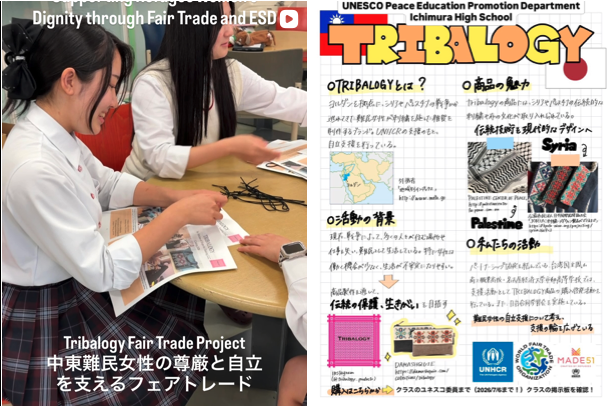
本校では、2026年6月から7月下旬にかけて、ヨルダンの社会的企業「Tribalogy(トライバロジー)」のフェアトレード活動について学び、難民女性が制作した商品を通して、仕事、文化、尊厳、国際支援の在り方を考える探究活動に取り組みました。

Tribalogyは、ヨルダンのザルカを拠点に、シリア、イラク、パレスチナなどにルーツを持つ難民や、受入地域の職人と協働する社会的企業です。難民女性たちは、故郷から受け継いだ刺しゅうなどの技術を生かしながら、バッグや小物などの商品を制作しています。

 Tribalogyの商品から、私たちの買い物と世界のつながりを考える

私たちは、ヨルダンで活動する社会的企業「Tribalogy(トライバロジー)」のフェアトレード活動について学びました。

Tribalogyでは、難民女性や地域の職人の方々が、刺しゅうなどの伝統的な技術を生かして商品を制作しています。私たちは、商品について調べる中で、手仕事が収入につながるだけでなく、文化を受け継ぐことや、自分らしく働くこと、尊厳を守ることにもつながっていると知りました。

最初は、商品を購入することが支援になると考えていました。しかし、学びを進める中で、買うことだけで終わってはいけないと感じました。

「誰が、どのような環境で作っているのか」
「商品に込められた思いや文化を、私たちは理解しているか」
「公正な取引とは、どのようなものか」
「自分たちの買い物は、社会にどのような影響を与えるのか」

私たちは、このような問いを持ちながら、フェアトレード、難民問題、働く権利、国際協力について考えてきました。

動画では、Tribalogyの活動や商品の背景、学習を通して私たちが気付いたことを、生徒自身の言葉で紹介しています。

フェアトレード商品を一つ購入するだけで、難民を取り巻くすべての問題が解決するわけではありません。紛争や避難、教育や仕事の機会の不足など、背景には複雑な課題があります。

それでも、商品を作った人のことを知り、その文化や技術を尊重し、自分の選択について考えることは、私たちにもできる行動の一つだと思います。

世界の問題を遠い出来事として終わらせず、日常の買い物や選択から、自分たちにできることを考えていきたいです。

インスタグラムリンク

High School Students Explore Fair Trade and Refugee Women’s Work

What Tribalogy Taught Us About the Connection Between Our Choices and the World

We learned about the fair trade activities of Tribalogy, a social enterprise based in Jordan.

At Tribalogy, refugee women and local artisans create products using traditional skills such as embroidery. As we learned more about their work, we came to understand that handicrafts can provide not only income, but also opportunities to preserve culture, work with dignity, and maintain a sense of identity.

At first, we thought that purchasing the products itself was the main form of support. However, as our learning continued, we realized that support should not end with simply buying something.

Who made this product, and under what circumstances?
Do we understand the culture and meaning behind it?
What does fair trade truly mean?
How do our everyday choices affect people and society?

By asking these questions, we explored fair trade, refugee issues, the right to work, and international cooperation.

In this video, we introduce Tribalogy’s activities, the stories behind its products, and what we discovered through our inquiry-based learning.

Buying one fair trade product cannot solve every challenge faced by refugees. Conflict, displacement, limited access to education, and a lack of employment opportunities are complex issues that require continued learning and action.

Even so, learning about the people who make the products, respecting their skills and culture, and thinking carefully about our own choices are meaningful steps that we can take.

We do not want to see global issues as distant problems unrelated to us. Through our daily choices, including what we buy, we hope to continue thinking about how we can contribute to a fairer and more peaceful society.

Please watch our video and learn more about Tribalogy and the ideas behind its fair trade activities.


ゲームを通してパレスチナ問題を学ぶ特別授業を実施しました

― 社会課題を「遠い出来事」で終わらせず、平和について考える ―

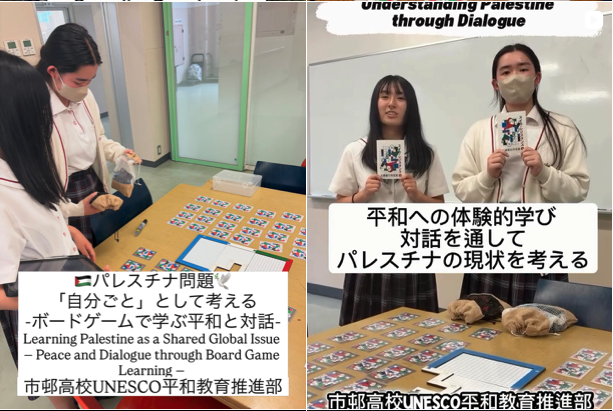
本校では、パレスチナにルーツを持つデザイナーのアハマド・サクファルハイト先生を講師としてお招きし、ボードゲームを通してパレスチナ問題について学ぶ特別授業を実施しました。

授業には、国際協力や平和について学ぶ「ユネスコゼミ」の高校2・3年生45名が参加しました。

アハマド先生は、パレスチナ出身のご両親のもと、サウジアラビアで生まれ育ち、現在は多摩美術大学大学院博士後期課程で学びながら、アートやデザイン、ゲームを活用した平和教育に取り組まれています。

今回の授業では、アハマド先生が考案したボードゲームを使い、ヨルダン川西岸地区における入植をめぐる複雑な問題について学びました。

生徒たちは、土地をめぐる対立や人々の置かれた状況を表したカードを読み取りながら、ゲームを進めました。単に知識として歴史や国際情勢を覚えるのではなく、異なる立場や力関係、選択によって状況が変化していく過程を体験し、パレスチナの人々が直面してきた人道上の課題について考えました。

ゲームを終えた生徒からは、パレスチナ問題の構造を体感できたことや、ニュースで見聞きするだけでは分からなかった複雑さに気付いたことなどが語られました。
本授業では、ゲームによって社会課題を単純化して理解することを目的としているのではありません。現実の問題は、ゲームだけで捉え切れるものではなく、歴史的背景や複数の立場、現在も続く人々の苦しみを、資料や対話を通して継続的に学ぶ必要があります。

その上で、ゲームを学びの入口として活用することにより、生徒たちは遠く離れた地域で起きている出来事を、自分たちとは無関係な問題として傍観するのではなく、平和、人権、公正、共生という視点から主体的に考える機会を得ました。

また、アハマド先生からは、学校での学びを社会や世界とつなげてほしいというメッセージが伝えられました。生徒たちは、異なる背景を持つ人の経験や思いに耳を傾け、学んだことを周囲に伝えることの大切さについても考えました。

今回の取組は、対話や体験を通して世界の課題を自分事として捉え、より公正で平和な社会の実現に向けて自らの役割を考える、ユネスコ平和教育およびESD(持続可能な開発のための教育)の実践です。

本校では今後も、国際機関、大学、専門家、国内外の学校や支援団体と連携しながら、生徒たちが事実に基づいて社会課題を探究し、異なる立場を尊重しながら対話し、平和のために行動する力を育む教育活動を推進してまいります。

本授業の様子は、2026年6月20日付の中日新聞朝刊市民版および「中日進学ナビ」で紹介されました。

【中日新聞・中日進学ナビ】
「パレスチナ問題 ゲームで学ぶ 名経大市邨高 作者が講師、人道危機体感」

Special Lesson on the Palestinian Issue Through Game-Based Learning

Encouraging Students to See Global Challenges as Their Own Concern

Our school invited Mr. Ahmad Sakfalhait, a designer with Palestinian roots, to lead a special lesson in which students learned about the Palestinian issue through a board game.

A total of 45 second- and third-year students from our UNESCO Seminar, which focuses on international cooperation and peace, participated in the lesson.

Mr. Ahmad was born and raised in Saudi Arabia to Palestinian parents. He is currently studying in the doctoral program at the Graduate School of Tama Art University, while also engaging in peace education through art, design, and game-based learning.

During the lesson, students used a board game designed by Mr. Ahmad to explore the complex issues surrounding settlements in the West Bank.

As they played, the students read cards representing conflicts over land and the situations faced by people living in the region. Rather than simply memorizing historical facts or international affairs, they experienced how circumstances can change depending on different positions, power relationships, and decisions. This helped them consider the humanitarian challenges faced by Palestinian people.

After the game, students reflected that they had gained a more concrete sense of the structure of the Palestinian issue and had become aware of complexities that are difficult to understand through news reports alone.

The purpose of the lesson was not to reduce a serious social issue to a simple game. The realities of the conflict cannot be fully understood through game-based learning alone. Continued study of the historical background, multiple perspectives, and the suffering of people affected by the conflict remains essential.

By using the game as an entry point, however, students were encouraged to move beyond viewing events in a distant region as unrelated to their own lives. They considered the issue from the perspectives of peace, human rights, justice, and coexistence.

Mr. Ahmad also encouraged students to connect what they learn at school with society and the wider world. The lesson gave students an opportunity to listen to the experiences and perspectives of people from different backgrounds and to consider the importance of sharing what they have learned with others.

This initiative represents a practical example of UNESCO peace education and Education for Sustainable Development (ESD). Through dialogue and experiential learning, students were encouraged to see global challenges as personally relevant and to consider their own role in building a more just and peaceful society.

Our school will continue to collaborate with international organizations, universities, experts, schools in Japan and overseas, and support organizations. Through these partnerships, we aim to nurture students who can investigate social issues based on facts, respect different perspectives, engage in dialogue, and take action for peace.

The lesson was featured in the June 20, 2026 morning edition of the Chunichi Shimbun and on the Chunichi Shingaku Navi website.


台湾姉妹校の生徒と名古屋市内フィールドワークを実施しました

― 名古屋港水族館で学ぶ、環境・文化・国際交流 ―

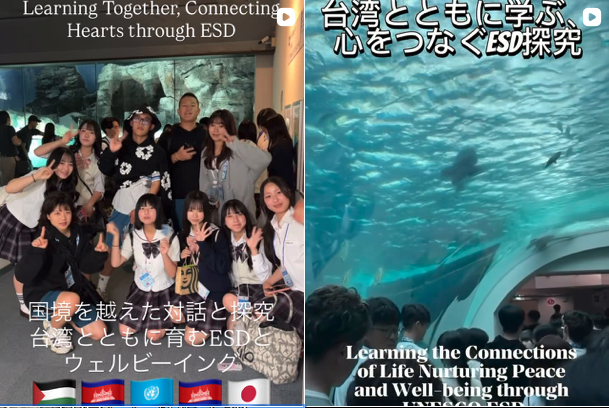
台湾の姉妹校である国立鳳山商工高級中等学校の生徒・教職員の皆様とともに、名古屋市内でのフィールドワークを実施し、名古屋港水族館を訪問しました。

今回の活動は、台湾と日本の生徒が学校内での発表や交流に加え、地域の文化・環境・社会について現地で学び、対話を深めることを目的として実施したものです。

名古屋港水族館では、海洋生物の生態や多様性、海洋環境の保全について学びました。生徒たちは、展示や解説を通して、海洋生態系が人々の暮らしと深く関わっていることや、気候変動、海洋汚染、生物多様性の保全といった世界共通の課題について考えました。

また、日本と台湾の生徒が同じ展示を見ながら、感じたことや関心を持った内容を伝え合う姿も見られました。言語や文化的背景が異なる中でも、互いに相手の考えを理解しようとする経験は、教室内の学習だけでは得られない国際理解の機会となりました。

本フィールドワークは、単なる施設見学ではなく、地域や自然環境を学びの場として活用し、世界的な課題と自分たちの生活とのつながりを考える探究活動として位置付けています。生徒が実際に見て、感じ、対話しながら問いを深めることにより、知識を社会や行動へとつなげる学びを目指しました。

さらに、台湾の生徒と行動を共にすることで、学校生活や文化、価値観の違いを知るとともに、共通する関心や課題にも気付くことができました。こうした継続的な交流は、一時的な国際交流にとどまらず、相互理解と信頼関係を育み、将来にわたる協働の基盤を形成するものです。

今回の取組は、異なる文化を尊重しながら、環境、平和、持続可能な社会について共に学ぶESD(持続可能な開発のための教育)の実践です。また、身近な地域を国際的な視点から捉え直し、生徒が自ら学びの意味を発見する機会にもなりました。

本校では今後も、台湾の姉妹校をはじめとする国内外の教育機関と連携し、校内での対話、探究発表、国際支援活動、地域フィールドワークを有機的につなげながら、生徒が世界の課題を自分事として捉え、他者と協働して行動する力を育む教育活動を進めてまいります。

当日のフィールドワークや交流の様子は、公式Instagramでも紹介しています。

【Instagram掲載ページ】
(.https://www.instagram.com/reel/DZaJMQBT-1h/?utm_source=ig_web_copy_link&igsh=MzRlODBiNWFlZA==)

Fieldwork in Nagoya with Students from Our Taiwanese Sister School

Learning about the Marine Environment, Culture, and International Understanding at the Port of Nagoya Public Aquarium

Students and teachers from our Taiwanese sister school, National Feng-Shan Senior Commercial and Industrial Vocational School, joined our students for fieldwork in Nagoya, including a visit to the Port of Nagoya Public Aquarium.

This activity was designed to extend learning beyond presentations and exchanges held at school. By exploring the local community together, students from Japan and Taiwan had the opportunity to deepen their understanding of the environment, culture, and society through observation, dialogue, and shared experiences.

At the Port of Nagoya Public Aquarium, the students learned about marine ecosystems, biodiversity, and the importance of protecting the ocean environment. Through the exhibitions and educational displays, they considered how marine ecosystems are closely connected to human life and reflected on global challenges such as climate change, marine pollution, and biodiversity conservation.

Students from Japan and Taiwan also shared their impressions and interests while viewing the same exhibitions. Although they came from different linguistic and cultural backgrounds, they made active efforts to understand one another and communicate their ideas. This experience provided a valuable opportunity for international learning that cannot be achieved through classroom study alone.

The fieldwork was not intended merely as a sightseeing visit. It was positioned as an inquiry-based learning activity in which students used the local environment as a place of learning and considered the connections between global issues and their own daily lives. By observing, experiencing, and engaging in dialogue, the students were encouraged to develop new questions and connect knowledge with future action.

Spending time together also enabled the students to recognize differences in school life, culture, and values, while discovering shared interests and concerns. Such continuous exchanges help build mutual understanding and trust and create a foundation for future collaboration beyond a single international event.

This initiative represents a practical example of Education for Sustainable Development (ESD), in which students learn together about the environment, peace, cultural diversity, and a sustainable society while respecting different perspectives. It also provided an opportunity for them to reconsider their own local community from an international point of view.

Our school will continue to collaborate with our Taiwanese sister school and other educational institutions in Japan and overseas. By connecting dialogue, inquiry-based presentations, international support activities, and community fieldwork, we aim to nurture students who can view global challenges as issues relevant to their own lives and work with others to take responsible action.

Photos and highlights from the fieldwork are available on our official Instagram page.

[Instagram Post]
( https://www.instagram.com/reel/DZaJMQBT-1h/?utm_source=ig_web_copy_link&igsh=MzRlODBiNWFlZA==)


台湾姉妹校との国際支援報告会を開催しました― カンボジア学校支援・パレスチナ学校支援について生徒が探究活動を発表 ―

台湾姉妹校との国際支援報告会を開催しました

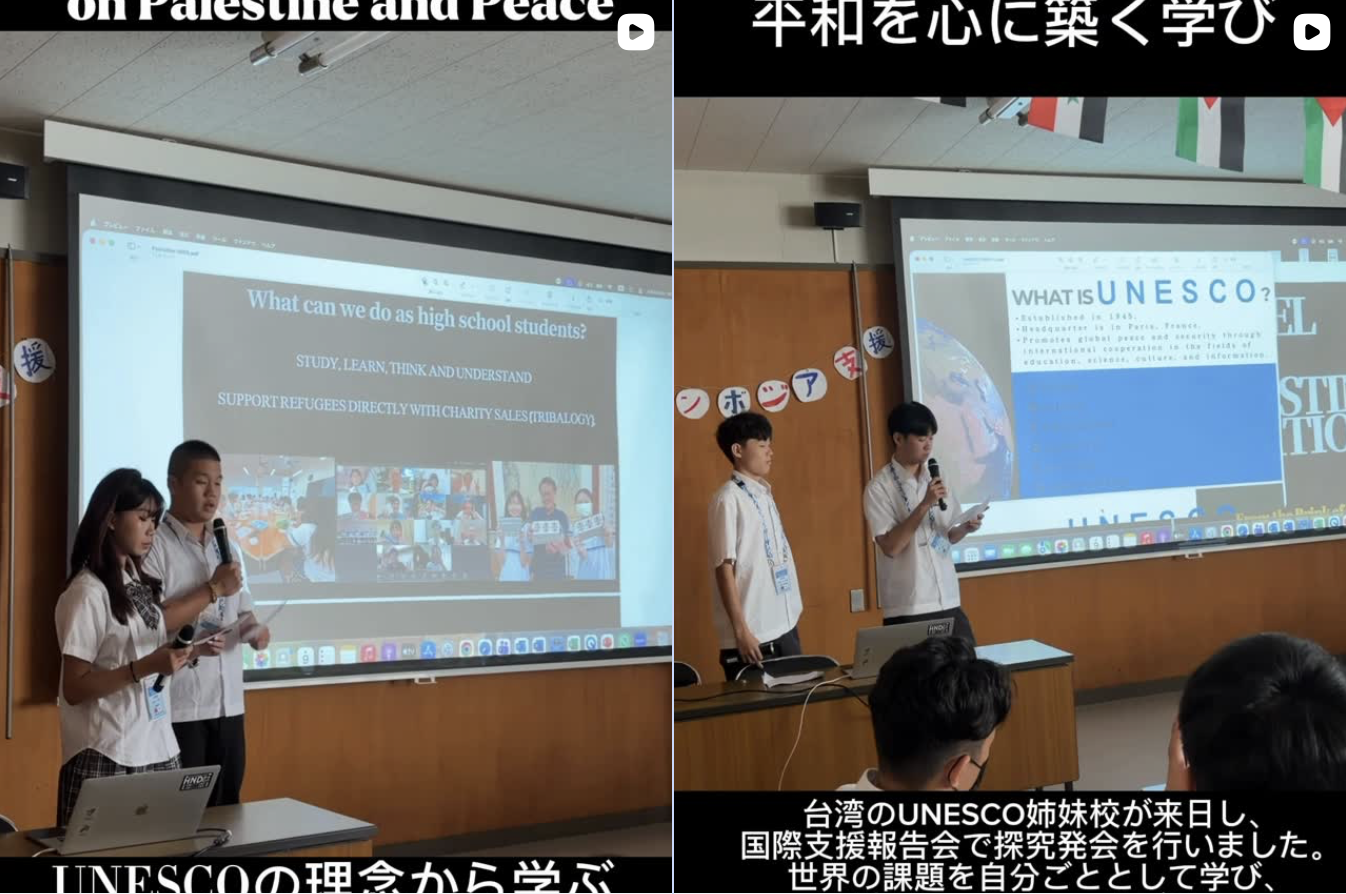
台湾の姉妹校である国立鳳山商工高級中等学校の生徒・教職員の皆様を本校にお迎えし、国際支援報告会を開催しました。

報告会では、本校の生徒たちが継続して取り組んできた「カンボジア学校支援」と「パレスチナ学校支援」をテーマに、これまでの学習や支援活動について探究発表を行いました。

カンボジア学校支援の発表では、現地の歴史や教育環境、農村地域の子どもたちが抱える課題について学んだ成果を紹介しました。また、現地の学校や関係者との交流を通して、生徒たちが考えてきた支援の在り方や、遊具・学用品などを届ける活動について報告しました。

パレスチナ学校支援の発表では、難民となった子どもたちの教育環境や生活の現状、教育を受け続けることの大切さについて説明しました。国連機関や支援団体から学んだ内容を基に、遠く離れた地域の問題を自分たちの生活や社会と結び付け、何ができるのかを考えてきた過程を発表しました。

生徒たちは、支援活動の成果を紹介するだけでなく、現地の人々を一方的に「助ける対象」として捉えるのではなく、相手の文化や思い、尊厳を尊重しながら、共に学び、協力することの重要性についても伝えました。

発表を聞いた台湾の生徒たちからは、支援活動の目的や具体的な取組について質問や感想が寄せられました。日本と台湾の生徒が、それぞれの立場から平和、人権、教育、国際協力について考えを共有する、貴重な学びの機会となりました。

今回の報告会は、生徒が社会課題について調べ、対話し、行動し、その成果を他者に伝える探究学習の実践です。また、国や地域を越えて互いの考えを尊重し、持続可能で平和な社会の実現に向けて協働するESD(持続可能な開発のための教育)の学びにもつながっています。

本校では今後も、台湾の姉妹校をはじめ、国内外の学校、大学、国際機関、関係団体の皆様と連携しながら、生徒たちが世界の課題を傍観せず、自ら問いを持ち、対話と行動を通して未来を築く教育活動を進めてまいります。

当日の発表や交流の様子は、公式Instagramでも紹介しています。

【Instagram掲載ページ】

International Support Presentation Held with Our Taiwanese Sister School

Students Present Their Inquiry-Based Learning on School Support in Cambodia and Palestine

We welcomed students and teachers from our Taiwanese sister school, National Feng-Shan Senior Commercial and Industrial Vocational School, and held an international support presentation at our school.

During the event, our students presented the results of their inquiry-based learning on two major themes: school support in Cambodia and school support for Palestinian children.

In the presentation on Cambodia, the students introduced what they had learned about the country’s history, educational environment, and the challenges faced by children in rural communities. They also reported on their ongoing efforts to support local schools, including the provision of playground equipment and school supplies, as well as the importance of learning directly from local people and partner organizations.

In the presentation on Palestine, the students explained the educational and living conditions of refugee children and reflected on the importance of ensuring continued access to education. Based on what they had learned from United Nations agencies and support organizations, they considered how issues in distant regions are connected to their own lives and society, and what actions they themselves could take.

The students did not simply report the outcomes of their support activities. They also emphasized the importance of respecting the dignity, culture, and perspectives of local people. Rather than viewing others only as recipients of assistance, the students reflected on the need to learn with them, listen to their voices, and build relationships based on mutual respect and cooperation.

Students from our Taiwanese sister school shared questions and comments about the aims and practical aspects of the activities. The event provided a valuable opportunity for students from Japan and Taiwan to exchange ideas and deepen their understanding of peace, human rights, education, and international cooperation.

This presentation was an example of inquiry-based learning in which students investigate global issues, engage in dialogue, take action, and communicate what they have learned to others. It was also an important practice of Education for Sustainable Development (ESD), encouraging young people to respect diverse perspectives and work together across national and cultural boundaries toward a more peaceful and sustainable society.

Our school will continue to collaborate with our Taiwanese sister school, as well as schools, universities, international organizations, and partner institutions in Japan and overseas. Through these partnerships, we will support students in developing their own questions, refusing to remain passive observers of global issues, and taking action to help create a better future.

Photos and highlights from the event are also available on our official Instagram page.

[Instagram Page]
https://www.instagram.com/p/DZgn011T7Oo/?hl=ja


台湾姉妹校とのユネスコ国際交流会・活動報告会を実施しました

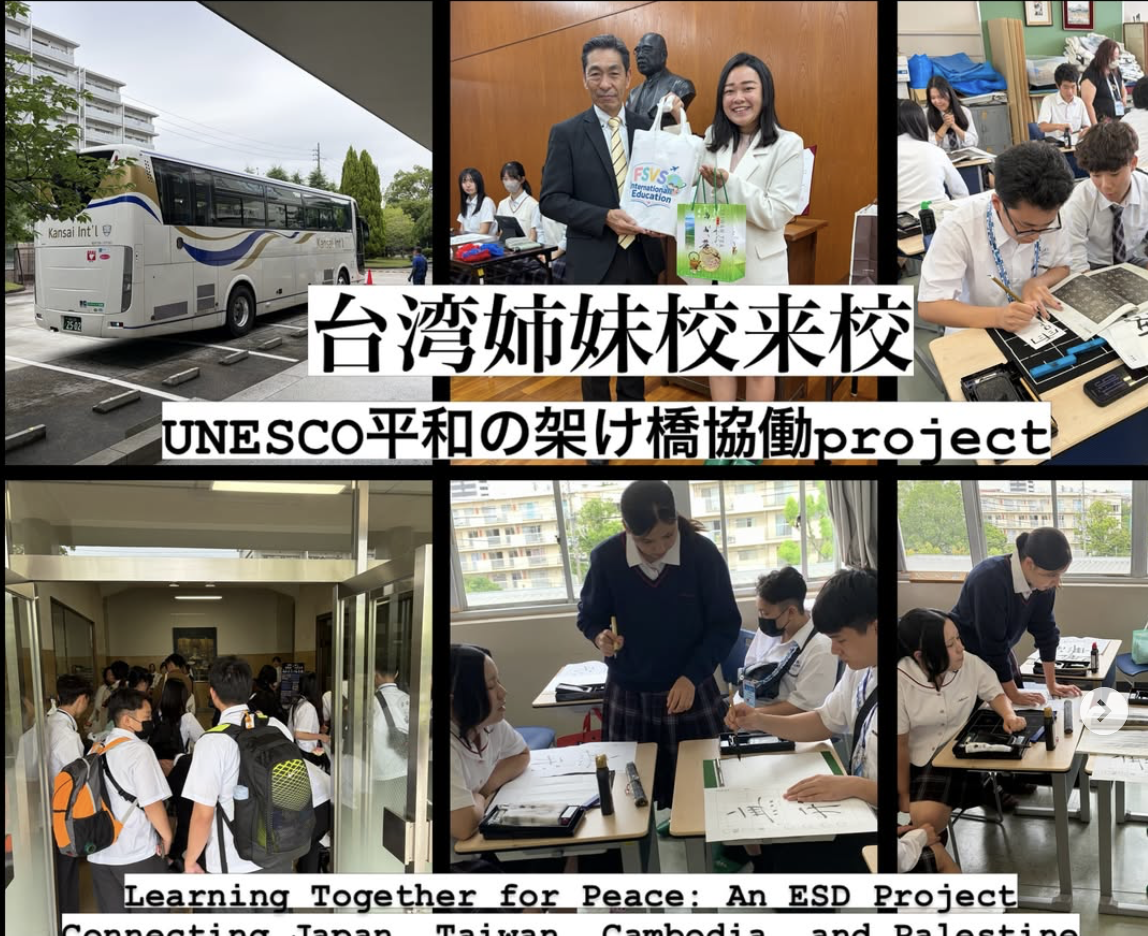
本校の姉妹校である台湾・国立鳳山商工高級中等学校の生徒・教職員の皆様が来校し、ユネスコ国際交流会および国際協働支援・探究活動の報告会を実施しました。

本校と国立鳳山商工高級中等学校は、これまでオンライン交流や相互訪問を通して、平和、国際理解、持続可能な社会、カンボジアや難民地域への国際支援などをテーマとした協働学習に取り組んできました。

今回の報告会では、日本と台湾の生徒たちが、それぞれの学校で取り組んできたユネスコ活動や国際支援、探究学習の成果を発表しました。生徒たちは、国や文化の違いを越えて互いの考えや実践を共有し、世界の課題を自分たちの問題として捉え、行動することの大切さについて学び合いました。

ユネスコ交流会では、生徒が主体となって交流を進め、学校生活や文化、社会課題への関心について対話しました。英語や身振りを交えながら相手を理解しようとする姿が見られ、異なる背景を持つ仲間との対話を通して、多様性を尊重する姿勢や国際的な視野を深める機会となりました。

また、歓迎行事では、本校校長と来校された国立鳳山商工高級中等学校の先生方による記念品の交換を行いました。両校の友好関係を確認するとともに、今後も継続して教育交流と生徒主体の協働活動を発展させていくことを願う、象徴的な時間となりました。

今回の交流は、単なる国際交流にとどまらず、平和や人権、国際協力、持続可能な社会について、生徒たちが対話し、共に考え、行動へとつなげるESD(持続可能な開発のための教育)の実践です。

本校では、今後も台湾の姉妹校をはじめ、国内外の学校や関係機関と連携しながら、生徒たちが世界の課題を傍観せず、自ら問いを持ち、他者と協働してよりよい未来を築く学びを推進してまいります。

当日の交流や生徒たちの活動の様子は、公式Instagramでも紹介しています。

【Instagram掲載ページ】
https://www.instagram.com/p/DZa6YmSE7X8/?utm_source=ig_web_copy_link&igsh=MzRlODBiNWFlZA==

ユネスコ75周年事業「高校生によるSDGsグローバル対談」

第2回 カンボジア世界遺産からの探究学習会

カンボジアの悲しい歴史や世界遺産について学び、平和や人権の大切さを考えるオンライン学習会です。日本や台湾の高校生・大学生がカンボジアを訪問し、現地から活動内容・カンボジアに関する探究学習の成果を発表します。

詳しい内容はこちら!(タップで表示)

トゥールスレン虐殺資料館から中継を行い、虐殺の歴史や平和の重要性について学び、講師の先生方と対話しながら、ユネスコ憲章の理念ESD(持続可能な社会づくりのための教育)について考えます。

カンボジアで起きた過去の悲劇を知って人権の大切さを理解し、戦争や暴力のない社会について考え、国や文化の違う人々と対話することで、未来の平和づくりに自分がどう関われるのかを考えることを目的としています。

台湾姉妹校の生徒とユネスコ平和茶道文化体験を行いました

本校を訪問した台湾・高雄市の姉妹校、国立鳳山商工高等学校の生徒たちとともに、「ユネスコ平和茶道文化体験」を行いました。

今回の活動では、台湾の生徒たちが日本文化を体験するだけでなく、本校の生徒が茶道や浴衣について事前に学び、その背景にある文化や精神を自分たちの言葉で伝えました。生徒が学ぶ側と伝える側の双方を経験する、主体的な国際交流となりました。


インスタグラムの動画報告はこちら

はじめに、参加した生徒たちは浴衣の着付けを学びました。本校の生徒は、着付けの手順を確認しながら、台湾の生徒一人ひとりを支援しました。相手の様子に配慮し、言葉や身ぶりを工夫して伝えることで、文化や言語の違いを越えた交流が生まれました。

インスタグラムの報告はこちら

続く茶道体験では、本校の生徒がお茶の点て方やいただき方、礼の作法などを紹介しました。また、茶道における「おもてなし」の心や、一つ一つの所作に込められた相手への敬意についても伝えました。

さらに、裏千家の先代家元が、茶道を通じた国際交流や平和への願いを大切にしてきた歩みについて学びました。茶道は、伝統的な作法を学ぶだけではなく、人と人とが同じ場を共有し、互いを尊重しながら心を通わせる文化であることを考える機会となりました。

本校の生徒にとっては、日本文化について改めて学び、その意味を整理し、海外の生徒に伝える実践的な学習となりました。相手に分かりやすく伝えるためには、知識を覚えるだけでなく、文化的な背景や相手の立場を考えることが必要です。生徒たちは、説明の仕方や表現を工夫しながら交流を進めました。

台湾の生徒たちも、浴衣や茶道を体験し、本校生徒との対話を通して、日本の伝統文化に込められた価値観に触れました。双方が質問し、感想を伝え合うことで、一方向の文化紹介ではなく、互いに学び合う交流となりました。

今回の活動は、文部科学省が重視する主体的・対話的な学びや、学校での学びを社会や文化と結び付ける教育実践につながるものです。また、文化の多様性を尊重し、対話を通して相互理解を深めることは、ユネスコが大切にする平和の文化の形成にも通じます。

文化の違いを知ることは、違いを分け隔てるためではなく、互いを理解するための出発点となります。生徒たちは、茶道や浴衣を通して日本文化を伝えるとともに、相手を尊重し、共に時間を過ごすことの大切さを学びました。

今後も本校では、伝統文化の学習と国際交流を結び付け、生徒が学び、伝え、対話する活動を通して、平和で持続可能な社会を担う力を育んでまいります

名古屋経済大学市邨高等学校ユネスコ平和教育推進部

UNESCO Peace through Tea Ceremony: A Cultural Exchange with Our Sister School from Taiwan

Students from our sister school in Kaohsiung, Taiwan, National Fengshan Senior Commercial & Industrial Vocational School, took part in a UNESCO-themed cultural exchange focused on peace, tea ceremony, and traditional Japanese culture.

The purpose of this activity was not only for the Taiwanese students to experience Japanese culture, but also for our students to learn about tea ceremony and yukata in advance and then communicate the cultural background and values behind these traditions in their own words. By taking on the roles of both learners and presenters, the students participated actively in an international exchange based on mutual learning.

The programme began with a yukata dressing experience. Our students learned the basic procedures and then supported each visiting student with the dressing process. By paying close attention to their partners and using simple words, gestures, and demonstrations, the students were able to communicate across linguistic and cultural differences.

During the tea ceremony session, our students introduced how to prepare and receive tea, as well as the meaning of greetings, bows, and other forms of etiquette. They also explained the spirit of omotenashi, or thoughtful hospitality, and the respect for others expressed through each movement.

The students also learned about the efforts of a former Grand Master of the Urasenke tradition, who promoted international exchange and peace through tea culture. This provided an opportunity to consider tea ceremony not only as a set of traditional practices, but also as a culture in which people share the same space, show respect for one another, and build connections through dialogue.

For our students, this activity became an opportunity to rediscover Japanese culture, organise what they had learned, and communicate it to students from another country. They recognised that explaining culture requires more than memorising information; it also requires an understanding of cultural background and consideration for the perspectives of others.

The visiting students experienced both yukata dressing and tea ceremony while learning about the values embedded in Japanese traditional culture. Through questions, conversation, and the exchange of impressions, the activity developed into a process of mutual learning rather than a one-way cultural presentation.

This activity reflected the importance placed by Japan’s Ministry of Education, Culture, Sports, Science and Technology on active, interactive, and meaningful learning, as well as connecting classroom learning with society and culture. It also corresponded with UNESCO’s emphasis on respect for cultural diversity, intercultural dialogue, and the development of a culture of peace.

Learning about cultural differences is not intended to create distance between people. Instead, it can provide a starting point for deeper mutual understanding. Through tea ceremony and yukata culture, the students learned the importance of respecting others, sharing time together, and building peaceful relationships across cultural boundaries.

Our school will continue to connect traditional cultural learning with international exchange and provide opportunities for students to learn, communicate, and engage in dialogue as participants in building a peaceful and sustainable society.

台湾姉妹校を迎え、ユネスコ国際交流・協働国際支援式典を開催しました

台湾・高雄市の姉妹校である国立鳳山商工高等学校(國立鳳山高級商工職業學校)の生徒・教職員の皆様が本校を訪問しました。

来校当日は、本校生徒が中心となって、歓迎行事と「ユネスコ国際交流・協働国際支援式典」を開催しました。生徒たちは、事前の企画、会場準備、司会進行、活動報告、交流プログラムの運営まで、それぞれの役割を担い、台湾の生徒を迎えました。

式典では、両校のこれまでの交流や共同学習を振り返るとともに、日本と台湾の生徒が協力して取り組んできた国際支援活動について報告しました。

インスタグラムでの報告はこちら

本事業では、カンボジアの教育課題や、中東地域の難民問題、フェアトレード、国際協力などをテーマに、オンライン交流や事前学習を重ねてきました。社会課題について知識を得るだけでなく、現地の方々や国際機関、NGO、支援団体などの声に学び、自分たちにできることを考え、具体的な行動へとつなげることを大切にしています。

今回の式典では、「支援する側」と「支援される側」という一方向の関係ではなく、異なる国や地域の人々から学び、互いの文化や考え方を尊重しながら、共通する課題に協力して向き合うことの大切さを確認しました。

文化交流では、両校の生徒が学校生活や地域文化について紹介し合い、言葉や文化の違いを越えて交流を深めました。生徒たちは、相手に伝わる表現を工夫しながら対話し、互いの共通点や違いを発見していました。

今回の交流は、姉妹校としての友好関係を深めるだけでなく、生徒が主体的に国際交流をつくり上げ、学びを社会への行動へと結び付ける機会となりました。

今後も両校は、対話と協働を大切にしながら、平和で持続可能な社会の実現に向けた学習と実践を継続してまいります。

名古屋経済大学市邨高等学校ユネスコ平和教育推進部

Student-Led UNESCO International Exchange and Collaborative Global Support Ceremony with Our Sister School from Taiwan

Students and teachers from our sister school in Kaohsiung, Taiwan, National Fengshan Senior Commercial & Industrial Vocational School, visited Ichimura Senior High School.

Upon their arrival, our students took the lead in organizing and conducting a UNESCO International Exchange and Collaborative Global Support Ceremony. They were actively involved in every stage of the event, including planning, venue preparation, welcoming the visitors, serving as masters of ceremonies, presenting activity reports, and facilitating the exchange programme.

During the ceremony, students from both schools reflected on their previous exchanges and collaborative learning activities. They also reported on the international support initiatives that Japanese and Taiwanese students have undertaken together.

Through this project, students from both countries have learned about global issues, including educational challenges in Cambodia, refugee-related issues in the Middle East, fair trade, and international cooperation. The project places importance not only on gaining knowledge, but also on listening respectfully to the voices of local communities, international organizations, NGOs, and other partners. Based on this learning, the students have considered what they can do and have connected their ideas to concrete action.

The ceremony also highlighted the importance of moving beyond a one-sided relationship between those who “provide support” and those who “receive support.” Instead, students were encouraged to learn from people in different countries and regions, respect diverse cultures and perspectives, and work together to address shared global challenges.

During the cultural exchange activities, students introduced their school lives and local cultures to one another. By communicating across linguistic and cultural differences, they deepened their mutual understanding and discovered both commonalities and differences between their communities.

This visit provided a valuable opportunity not only to strengthen the friendship between the two sister schools, but also for students to take ownership of international exchange and connect their learning with action for society.

The two schools will continue to value dialogue, mutual respect, and collaboration as they work together toward a more peaceful and sustainable future.


台湾姉妹校との文化交流・国際支援報告会に向けて準備を進めています

5月に、本校の姉妹校協定校である台湾・高雄市の国立鳳山商工高等学校(正式名称:國立鳳山高級商工職業學校)の生徒・教職員の皆様が来日します。

今回の来日にあわせて、両校の生徒による文化交流と、日本・台湾の生徒が協働して取り組んできた国際支援活動の報告会を開催します。

現在、本校の生徒たちは、台湾の皆様を迎えるため、交流プログラムの検討、発表資料の作成、会場準備、当日の進行や役割分担の確認に取り組んでいます。相手の文化や学校生活を尊重し、互いに安心して対話できる交流となるよう、生徒同士で意見を出し合いながら準備を進めています。

本事業では、日本と台湾の生徒がオンライン交流や共同学習を重ね、カンボジアの教育課題、中東地域の難民問題、フェアトレード、国際協力などについて学んできました。社会課題について知るだけで終わるのではなく、現地の方々、国際機関、NGOなどの声に学び、自分たちにできることを考え、国際支援や発信などの具体的な行動へとつなげることを大切にしています。

報告会では、これまでの活動成果に加え、日本と台湾の生徒が国や文化の違いを越え、どのように対話し、協働してきたのかを共有します。

姉妹校との交流を通して、異なる文化を尊重する姿勢と、共通する社会課題に協力して向き合う力を育むことを目指し、生徒を中心に準備を進めています。

名古屋経済大学市邨高等学校ユネスコ平和教育推進

インスタグラムの報告はこちら

Preparing to Welcome Our Sister School from Taiwan

In May, students and teachers from National Fengshan Senior Commercial & Industrial Vocational School in Kaohsiung, Taiwan, our sister school, will visit Japan and Ichimura Senior High School.

During their visit, students from both schools will participate in cultural exchange activities and hold a presentation session on the international support initiatives that they have undertaken collaboratively.

In preparation for the visit, our students are discussing the exchange programme, preparing presentation materials and the venue, and confirming their respective roles for the day. They are working together to create an environment in which students from both schools can communicate comfortably, while respecting one another’s cultures, values, and school traditions.

Through this project, students in Japan and Taiwan have participated in online exchanges and collaborative learning on global issues, including educational challenges in Cambodia, refugee-related issues in the Middle East, fair trade, and international cooperation.

The project places importance not only on learning about global challenges, but also on listening to the voices of people in the affected communities, international organisations, NGOs, and other partners. Based on what they have learned, the students consider what they can do and connect their learning to concrete actions, including international support activities and public awareness initiatives.

At the presentation session, the students will share not only the outcomes of their activities, but also the process through which students from Japan and Taiwan have engaged in dialogue, respected different perspectives, and worked collaboratively across national and cultural boundaries.

Through this sister-school exchange, we hope to deepen mutual understanding and friendship between the two schools. We will continue our student-led preparations so that this visit will provide a meaningful opportunity for students to learn from one another and work together to address shared global challenges.