対面の交流で深まった対話と学び ― 昼食交流と島でのフィールドワーク ―
これまでオンラインで継続的に学び合い、パレスチナの子どもたちへの学校支援、カンボジアの子どもたちへの学校支援、難民女性のフェアトレード支援に、ともに取り組んできた日本と台湾の生徒たちは、午後も対面での交流を深めました。
世界の課題について共に学び、発表するだけでなく、その学びを実際の行動へとつなげてきた生徒たちが、同じ時間と空間を共有しながら対話を重ねることは、本事業ならではの大切な学びの機会となりました。
① 昼食交流 黄埔新村(Huangpu New Village)
午後はまず、黄埔新村(Huangpu New Village)にある日本の歴史的な建物を活用したレストランで、日本と台湾の生徒たちがグループに分かれて昼食交流を行いました。
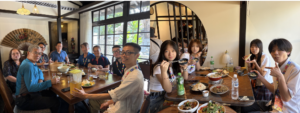
落ち着いた空間の中で台湾の料理を囲みながら、これまでオンラインでともに学び、支援活動に取り組んできた仲間同士が、対面でゆっくりと言葉を交わす時間となりました。
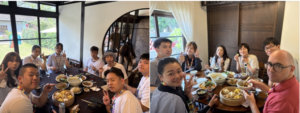
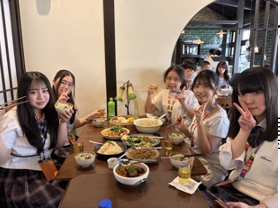
同じ食卓を囲みながら、互いの考えや日常、これまでの活動について語り合うことは、相手への理解を深めるだけでなく、自分自身の学びを見つめ直す機会にもなります。こうした交流は、ユネスコ憲章第1条が示す、教育・文化を通した諸国民の交流と相互理解の促進にも通じるものです。
また、文部科学省が重視する「主体的・対話的で深い学び」や、文部科学省EDU-Portニッポンが大切にする国境を越えた学びの共有という視点から見ても、意義ある実践の一つといえます。
相手を尊重しながら、自分の思いや考えを伝えようとする姿勢は、言葉の壁を越えて相互理解を築こうとする実践であり、ユネスコ憲章の理念にも通じるものです。
こうした経験は、ESDの視点に加え、SEL(社会性と情動の学習)の視点からも大切な学びであり、対話を通して他者を理解し、ともに学ぶ関係を育むことは、生徒たちのウェルビーイングにもつながることが期待されます。
② 島でのフィールドワーク
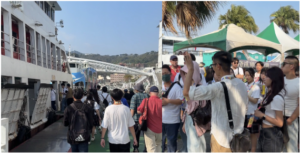
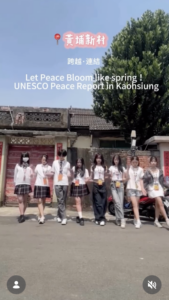
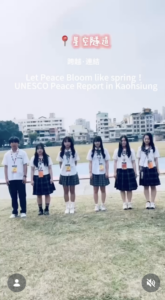
昼食交流の後、生徒たちは船で旗津(Cijin / Qijin)へ移動し、島でのフィールドワークを行いました。
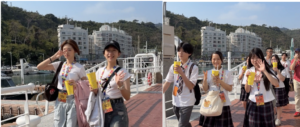
海を渡って現地を訪れ、ともに歩きながら地域の景観や雰囲気に触れることは、教室の中だけでは得られない学びにつながります。生徒たちは、対話を重ねながら景色を見つめ、地域の歩みや文化に思いを寄せる時間を持ちました。
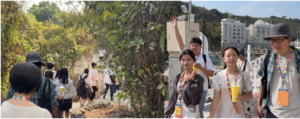
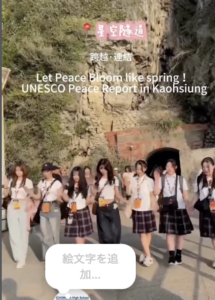
島内では、旗後砲台(Cihou Fort)へ向かって歩き、山の上から周囲の景色を見渡しました。現地を実際に歩き、自分の目で見て、感じたことを互いに伝え合うことは、知識を覚えるだけではない探究的な学びへとつながります。
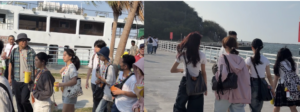
異なる文化的背景をもつ生徒同士が、同じ場所で同じ景色を見ながら語り合うことは、相手の見方や感じ方にふれ、自分の考えを深める貴重な機会となりました。
インスタグラムでの報告の動画はこちら
③ 対話と交流が育む学び
午後の活動を通して、生徒たちは、自分の言葉で伝えること、相手の話に耳を傾けること、ともに考えることの大切さをあらためて学びました。その積み重ねは、自分がこの学びの場の一員として役割を果たしているという実感につながり、「自己有用感」を育むことにもつながります。
このような学びは、知識の習得にとどまらず、対話を通して他者を理解し、自らの考えを深めていく「ESDの実践」として捉えることができます。
また、相手を尊重しながら関わり合い、言葉の違いを越えて理解し合おうとする経験は、学校教育における「ウェルビーイング」の向上にも寄与することが期待されます。
本校では今後も、文部科学省EDU-Portニッポン応援プロジェクトのもと、ユネスコ憲章の理念をふまえながら、市邨学園の理念である、慈悲(あたたかい心)忠実(すなおな心)忍耐(くじけない心)の理念に則り、対話と交流を通して世界の課題や多様な文化に向き合う教育実践を積み重ねてまいります。
次回のレポート4では、日本と台湾の生徒たちがこれまでの学びと実践を共有した、国際支援報告シンポジウムの様子をご報告いたします。
Taiwan Report Meeting Report 3
Dialogue and Learning Deepened Through the Afternoon Program
– Lunch Exchange and a Fieldwork Visit on the Island –
The Japanese and Taiwanese students, who had been learning together online and working side by side on support for Palestinian children’s schools, Cambodian children’s schools, and fair-trade support for refugee women, continued to deepen their face-to-face exchange in the afternoon. For students who have not only studied global issues and given presentations together, but have also connected their learning to concrete action, sharing the same time and space and engaging in direct dialogue became another meaningful opportunity for learning unique to this project.
① Lunch Exchange
The afternoon began with a lunch exchange at a restaurant in Huangpu New Village, a renovated historic building, where Japanese and Taiwanese students were divided into small groups. Over Taiwanese dishes in a calm and welcoming setting, students who had learned together online and collaborated in support activities were able to sit down face to face and talk at length.
Sharing the same table and discussing their thoughts, daily lives, and past activities helped students deepen their understanding of one another while also reflecting on their own learning. Such exchanges are also connected to the spirit of Article 1 of the UNESCO Constitution, which emphasizes promoting exchange and mutual understanding among peoples through education and culture. It can also be seen as a meaningful practice from the perspective of MEXT’s emphasis on “independent, interactive, and deep learning,” as well as EDU-Port Japan’s commitment to sharing learning across borders.
Moreover, the attitude of trying to communicate one’s thoughts and feelings while respecting others represents an effort to build mutual understanding beyond language barriers, and this, too, resonates with the ideals of the UNESCO Constitution.
Such experiences are valuable not only from the perspective of ESD, but also from that of SEL (Social and Emotional Learning). Through dialogue, students learn to understand others and to build relationships in which they can learn together, and this is also expected to contribute to their well-being.
② Fieldwork on the Island
After lunch, the students traveled by boat to Cijin / Qijin and took part in a fieldwork activity on the island. Crossing the sea and walking through the local area together, while experiencing its scenery and atmosphere, offered a kind of learning that cannot be gained in the classroom alone. As they continued their conversations, the students reflected on the landscape before them and considered the culture and history of the area.
On the island, the students walked toward Cihou Fort and looked out over the surrounding scenery from the hilltop. Actually walking through the site, seeing it with their own eyes, and sharing what they felt with one another encouraged a form of inquiry-based learning that goes beyond simply memorizing knowledge. For students from different cultural backgrounds to stand in the same place, look at the same view, and talk together was a valuable opportunity to encounter each other’s perspectives and deepen their own thinking.
③ Learning Fostered Through Dialogue and Exchange
Through the afternoon’s activities, the students once again learned the importance of expressing themselves in their own words, listening carefully to others, and thinking together. These repeated experiences also helped them feel that they each had a role to play as members of this shared learning community, which in turn can nurture a sense of self-worth and personal contribution.
This kind of learning can be understood as an ESD practice that goes beyond the acquisition of knowledge and instead deepens understanding through dialogue. Experiences of respecting one another, engaging with each other sincerely, and trying to understand one another beyond differences in language can also be expected to contribute to students’ well-being in school education.
In accordance with the ideals of UNESCO, the principles of the UNESCO Constitution, the vision of MEXT’s EDU-Port Japan Support Project, and the founding spirit of Ichimura Gakuen, our school will continue to promote educational practices grounded in dialogue and exchange.
In Report 4, we will share the International Support Report Symposium, where Japanese and Taiwanese students presented the learning and practical activities they have developed together.